by Webhost365 Engineering Team | Jun 8, 2026 | Web Hosting
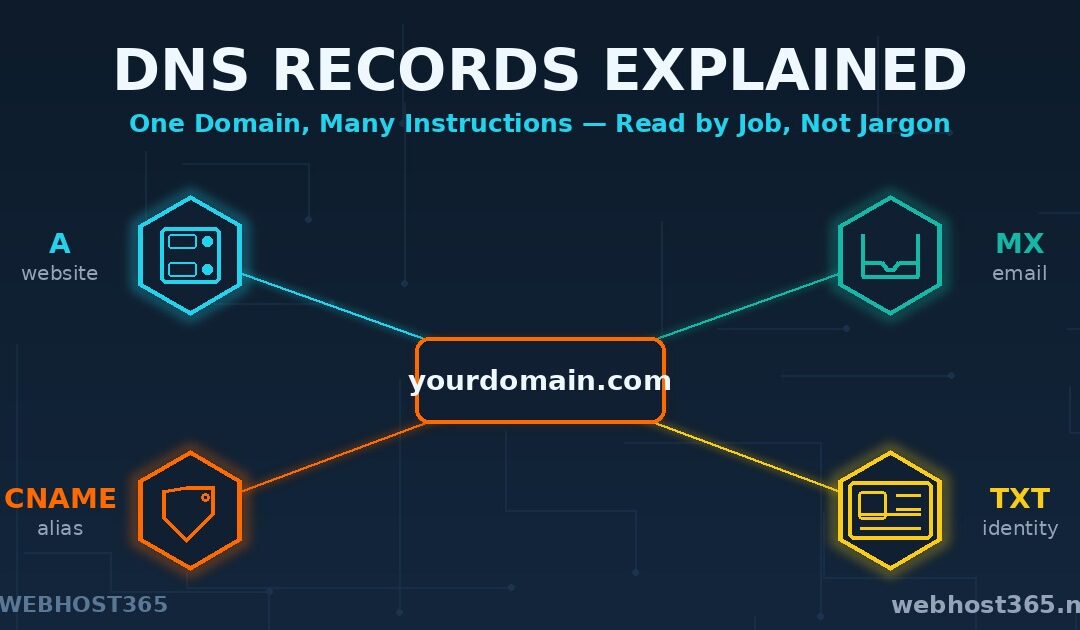
DNS records are the instructions that tell the internet where everything attached to your domain lives — your website, your email, and the proof that the domain is really yours. When someone types your domain, visits your site, or sends you an email, their computer...
by Webhost365 Engineering Team | Jun 7, 2026 | Web Hosting
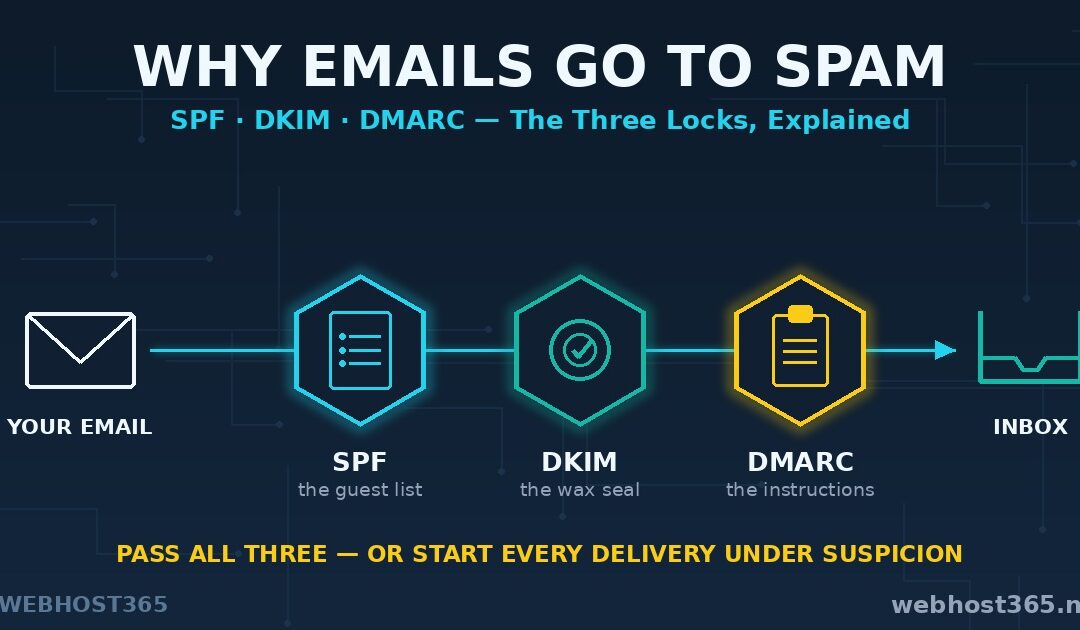
Your emails go to spam when the receiving server cannot prove the sender is really you — and SPF, DKIM, and DMARC are the three DNS records that provide that proof. They are not optional extras for big companies. Since Gmail and Yahoo began enforcing authentication...
by Webhost365 Engineering Team | Jun 7, 2026 | WordPress
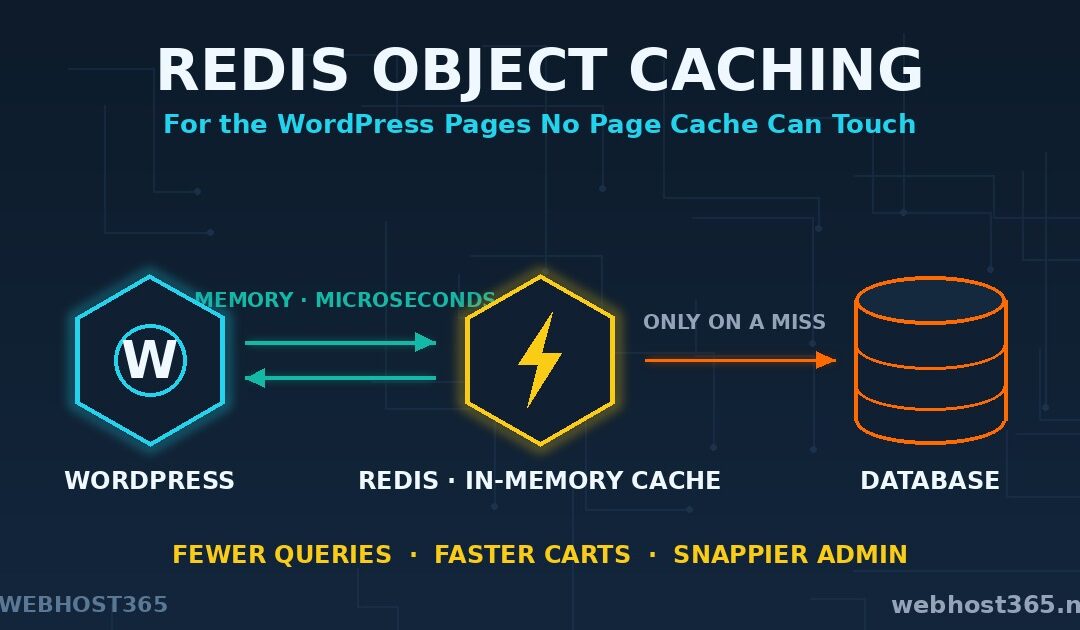
Redis object caching stores the results of your WordPress database queries in memory, so pages that must be built fresh get built fast. It is the speed layer for everything your page cache cannot touch. A page cache already serves your anonymous visitors instantly —...
by Webhost365 Engineering Team | Jun 6, 2026 | Web Hosting
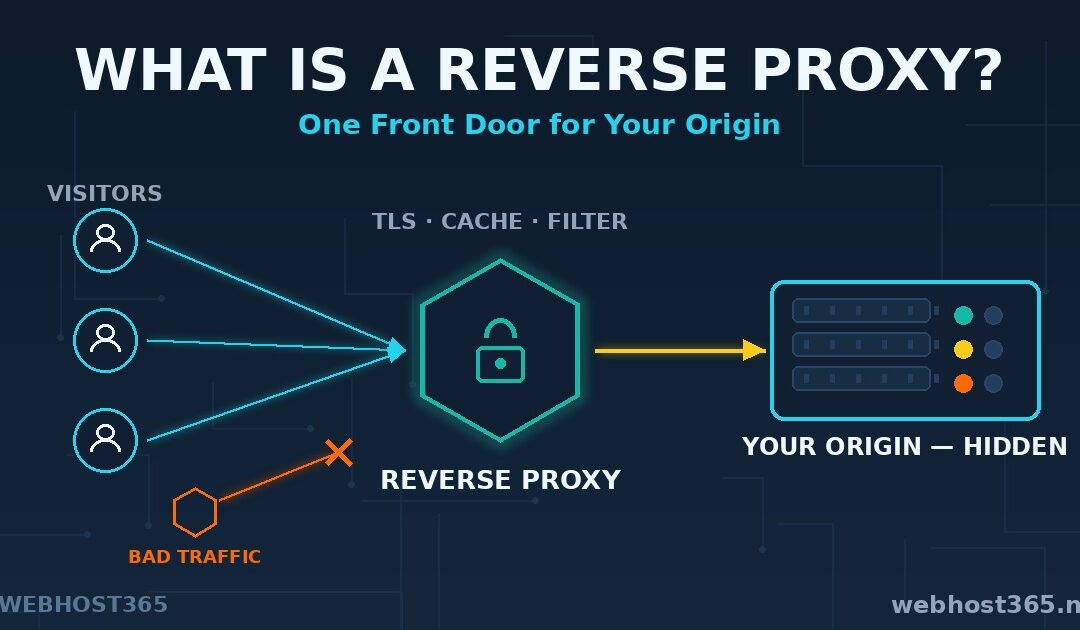
A reverse proxy is a server that sits in front of your website and answers every visitor on its behalf. Browsers never talk to your real server directly. They talk to the reverse proxy, which fetches the response, often speeds it up, and sends it back. That single...
by Webhost365 Engineering Team | Jun 6, 2026 | Artificial Intelligence
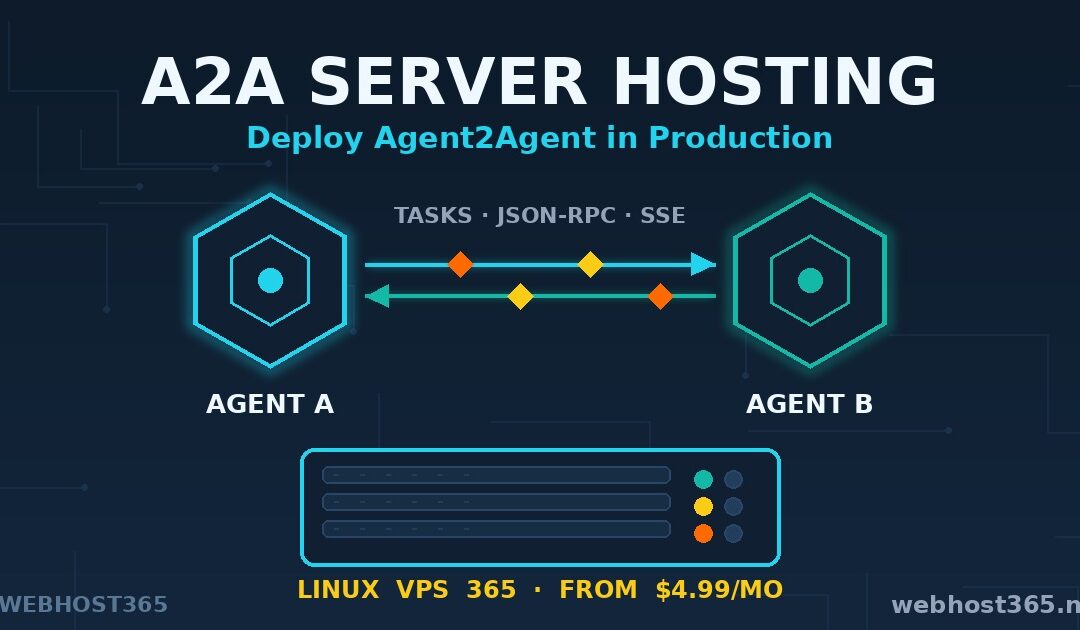
A2A server hosting means running an Agent2Agent protocol server on infrastructure you control, with a public HTTPS endpoint, a discoverable agent card, and a process that survives reboots. That is what this guide builds. By the end, you will have a working A2A agent...
by Webhost365 Engineering Team | Jun 5, 2026 | Artificial Intelligence, WordPress
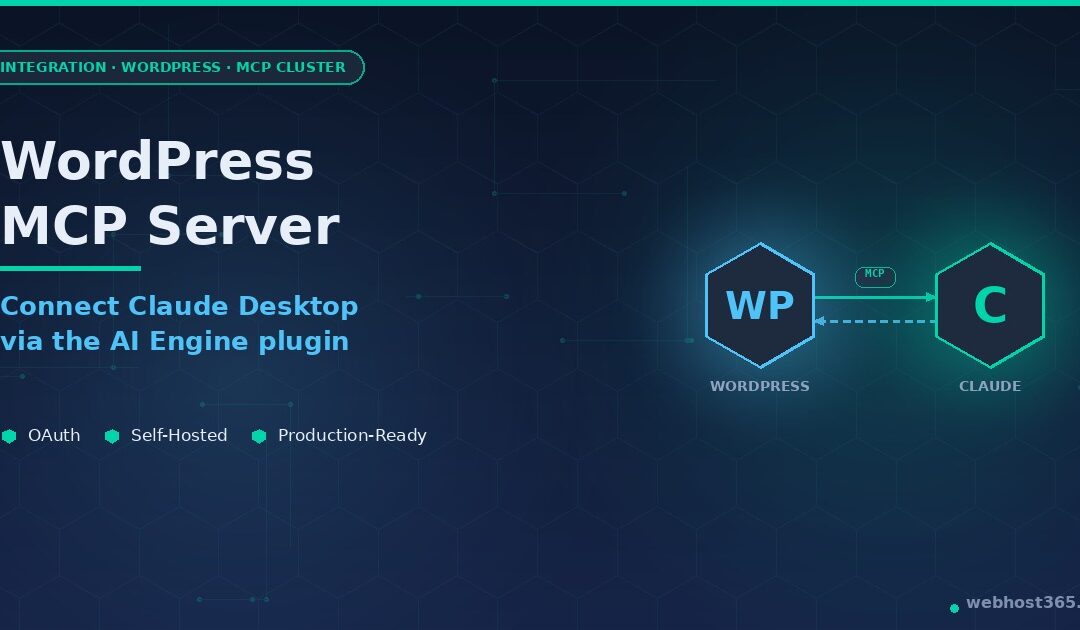
WordPress and Claude are a natural pair, and almost nobody is using them together properly. Most “AI in WordPress” content is about adding a chatbot to your homepage or auto-generating filler posts. What we are going to do in this guide is different:...
by Webhost365 Engineering Team | May 16, 2026 | Artificial Intelligence
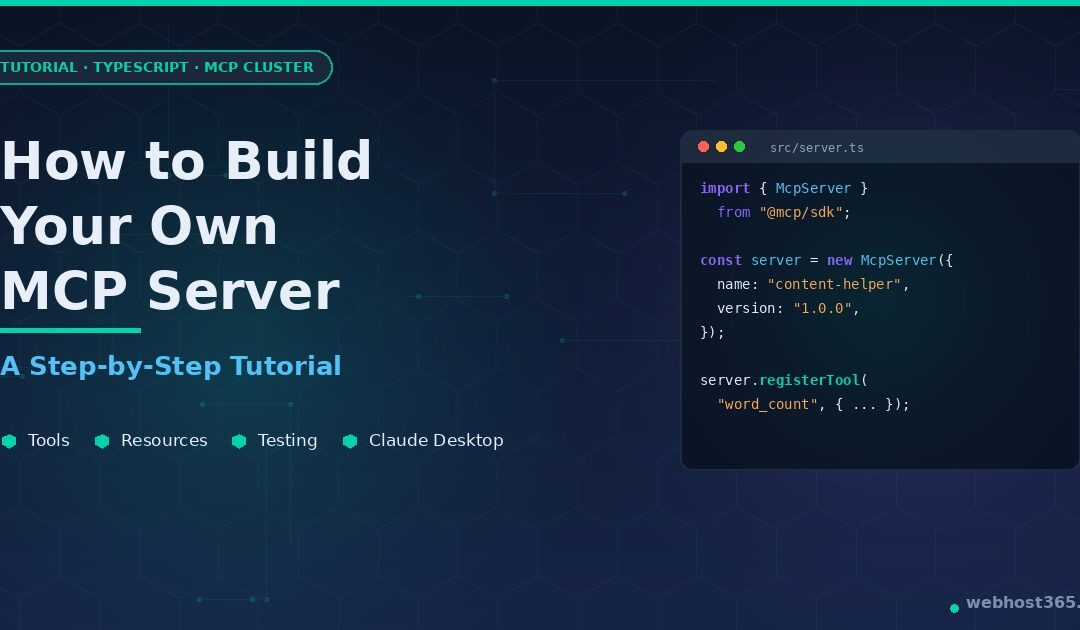
Hosting an MCP server is only half the picture. The other half — and arguably the more interesting half — is building one. Last week we walked through how to self-host a Model Context Protocol server on a VPS: the architecture, the deployment, the security choices...
by Webhost365 Engineering Team | May 14, 2026 | Artificial Intelligence, Web Hosting
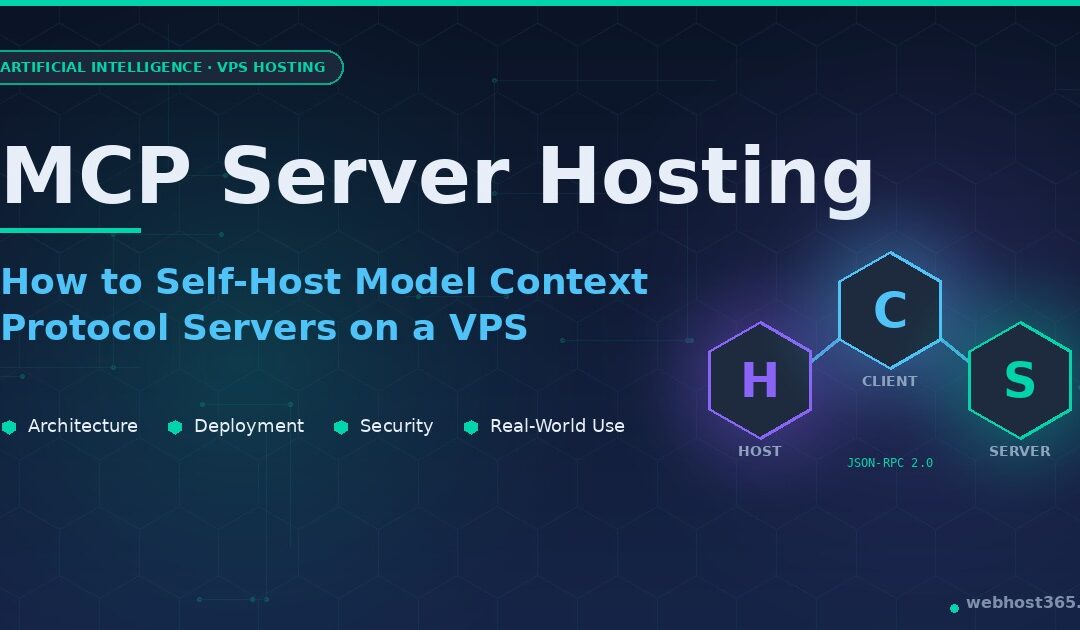
Every AI agent eventually hits the same wall. It reasons brilliantly across public data, but the moment your workflow needs a private database, an internal tool, or a proprietary API, the agent goes silent — or worse, hallucinates an answer. The old fix was writing a...
by Webhost365 Engineering Team | Apr 29, 2026 | Web Hosting
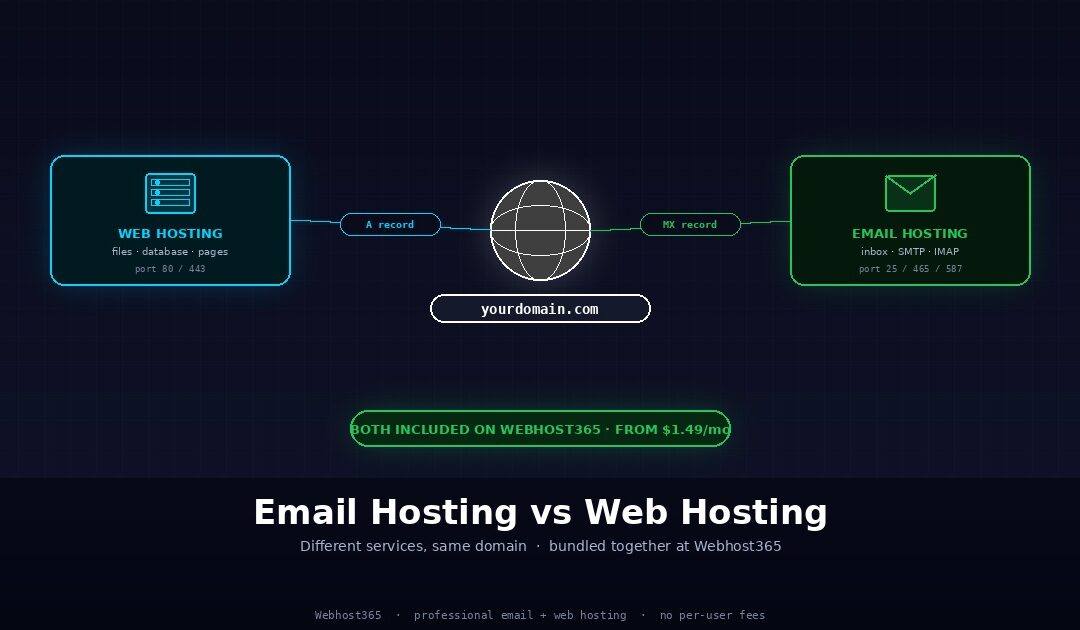
Email hosting and web hosting solve different problems. Web hosting runs your website — the files, database, and content visitors see when they type your domain into a browser. Email hosting runs your inbox — the servers that send and receive messages addressed to...
by Webhost365 Engineering Team | Apr 27, 2026 | Web Hosting
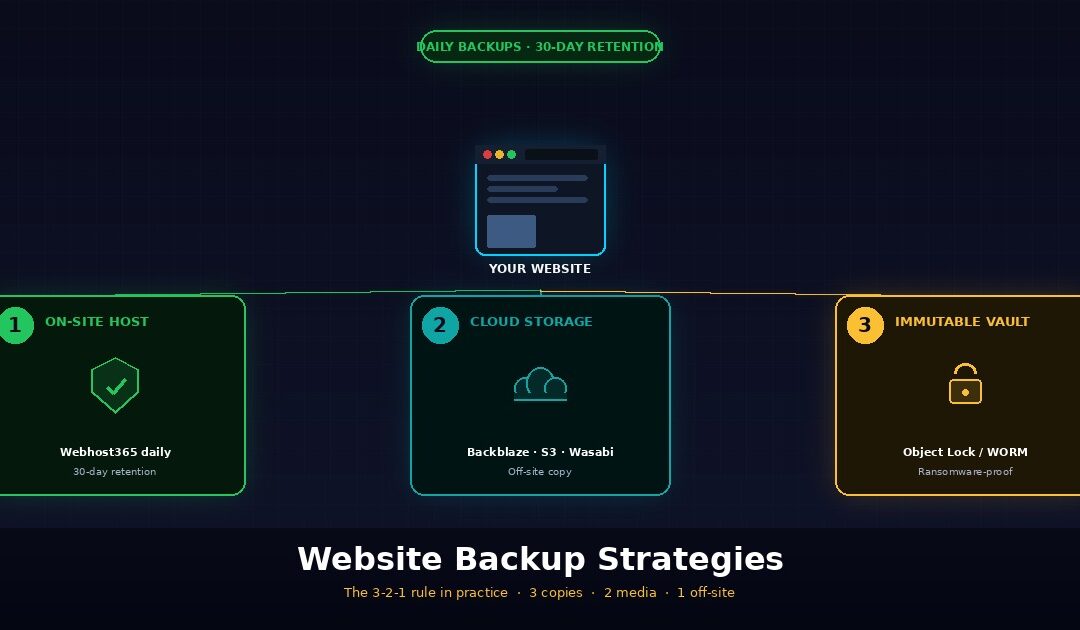
A solid website backup strategy follows the 3-2-1 rule: keep three copies of your site, on two different storage types, with one copy stored off-site. This rule, originally formulated by photographer Peter Krogh in 2009 and now endorsed by the US Cybersecurity and...
by Webhost365 Engineering Team | Apr 23, 2026 | Web Hosting
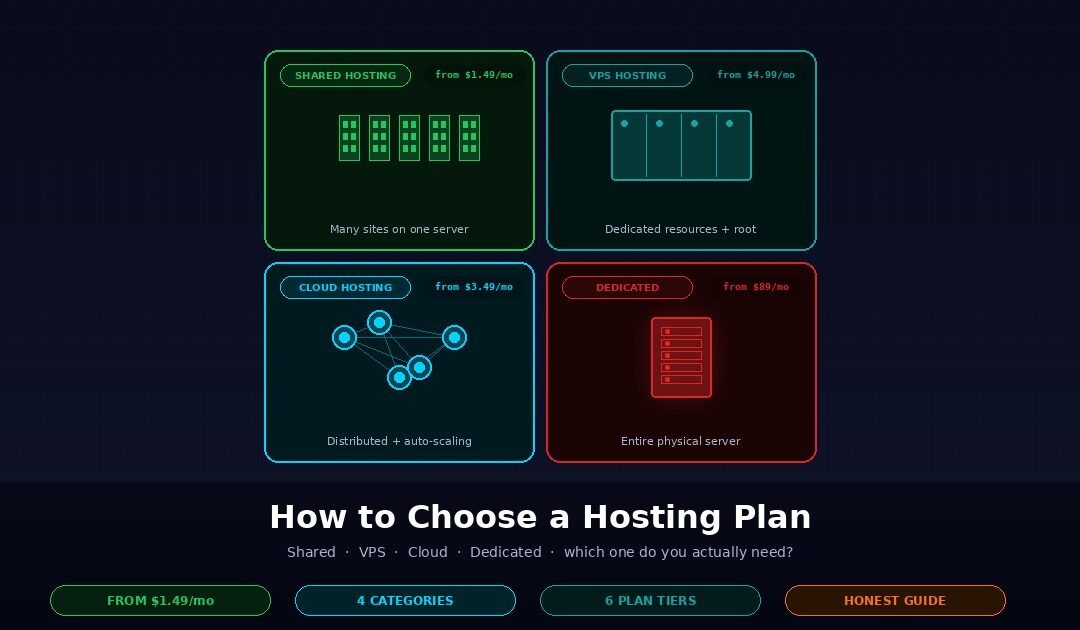
Choosing a hosting plan comes down to four questions: how much traffic you expect, how much control you need over the server, how much you want to pay, and how much of the technical work you want to do yourself. Shared hosting handles small sites at the lowest cost....
by Webhost365 Engineering Team | Apr 23, 2026 | Web Hosting
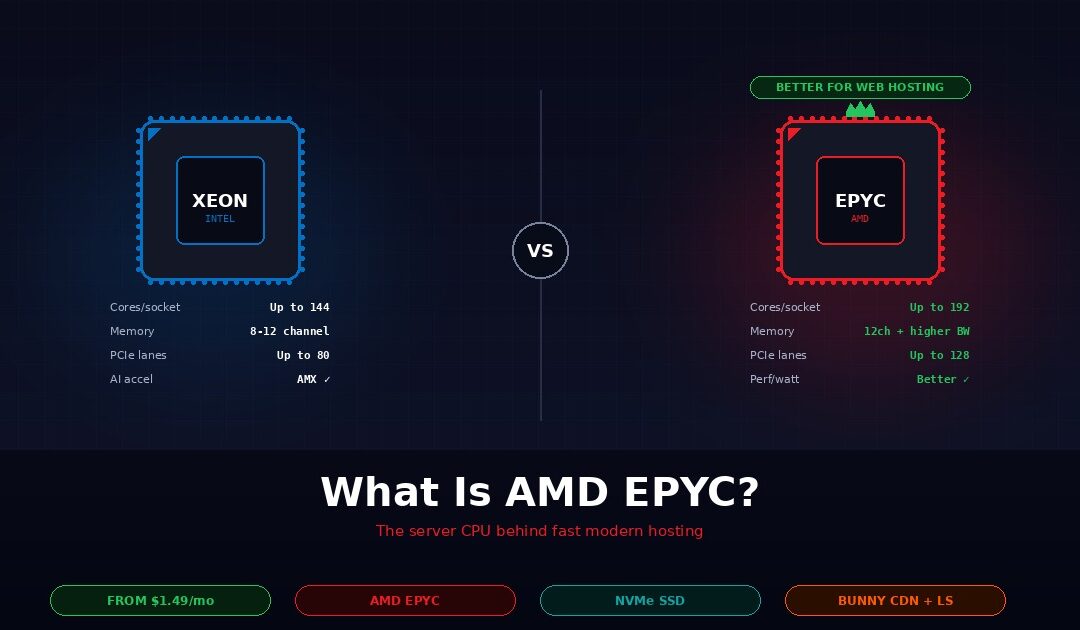
AMD EPYC is a family of server-grade processors built by AMD specifically for data centres and web hosting workloads. Compared to Intel Xeon, the processor family it competes with, AMD EPYC typically delivers more cores per socket, higher memory bandwidth, more PCIe...