by Webhost365 Engineering Team | Sep 18, 2026 | Hosting Explained, Web Hosting
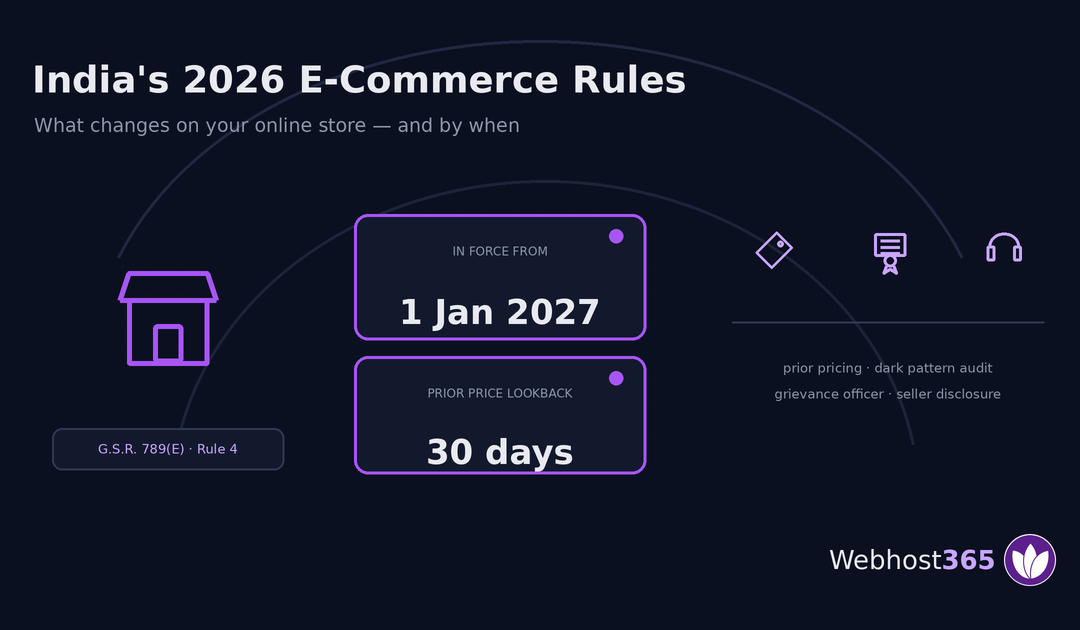
If you sell anything online to Indian consumers, new rules take effect on 1 January 2027. They change what your store must display: the prior price beside any discount, labelled sponsored listings, an annual dark-pattern audit certificate, and full contact details for...
by Webhost365 Engineering Team | Sep 17, 2026 | Hosting Explained, Web Hosting
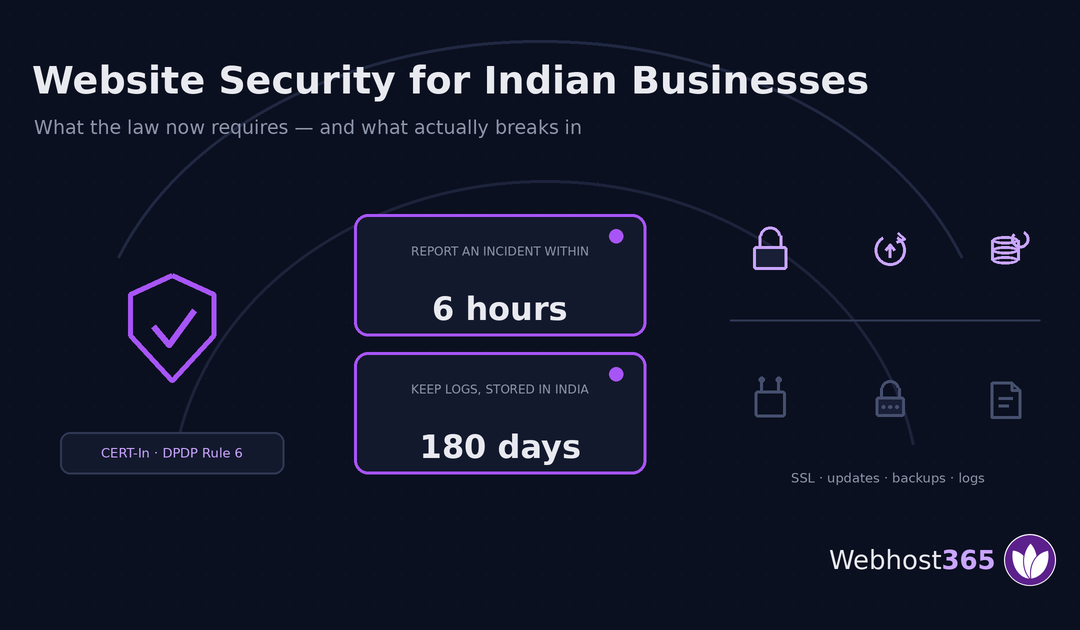
Website security in India is no longer just good practice. Two frameworks now impose specific duties on ordinary businesses: reporting a cyber incident within six hours, and keeping system logs inside India for 180 days. This guide covers what the law requires, what...
by Webhost365 Engineering Team | Sep 16, 2026 | Hosting Explained, Web Hosting
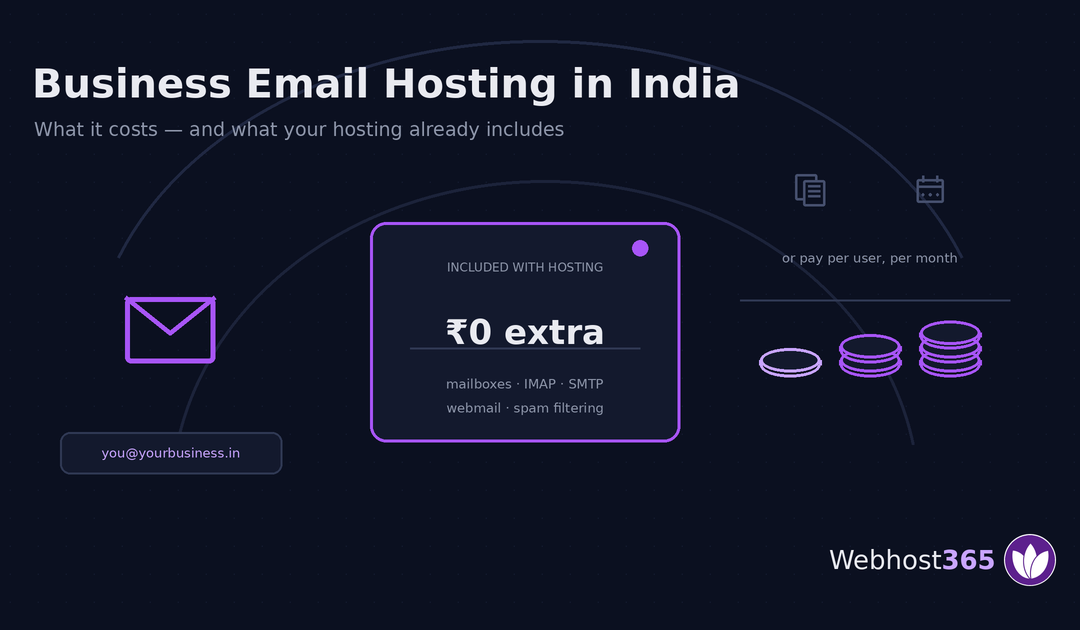
Business email in India costs anywhere from nothing to over ₹1,000 per user per month, and the quotes you find online contradict each other wildly. Many small businesses are paying per user for something their hosting already includes. This guide explains what the...
by Webhost365 Engineering Team | Sep 15, 2026 | Hosting Explained, Web Hosting
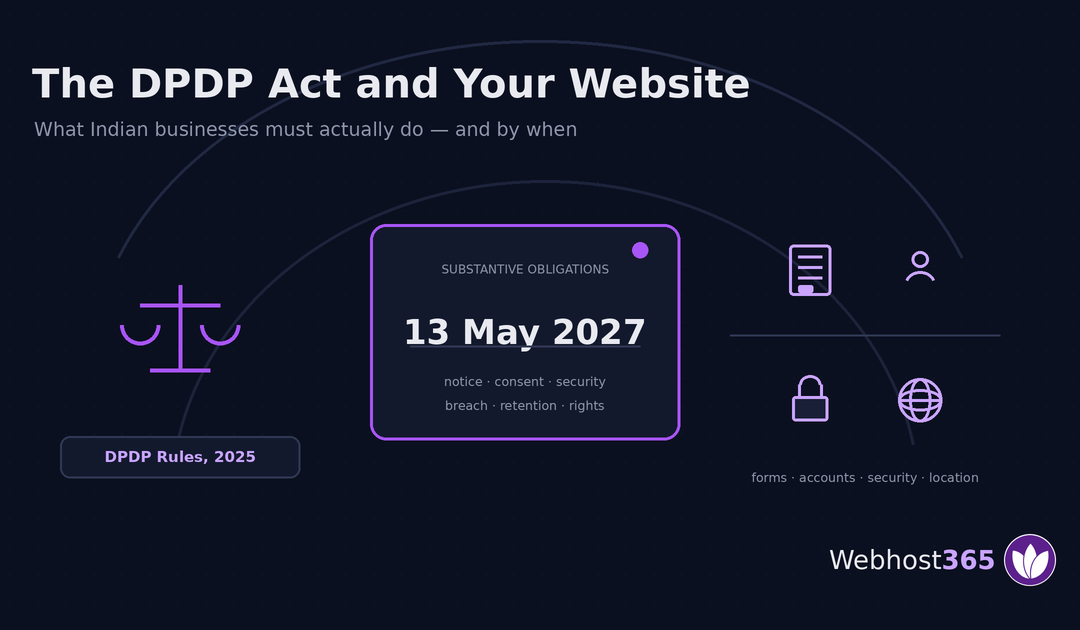
If your website collects any personal data from someone in India — a name in a contact form, an email for a newsletter, a customer account — the Digital Personal Data Protection Act applies to you. The substantive obligations commence on 13 May 2027. This is a...

by Webhost365 Engineering Team | Sep 11, 2026 | Hosting Explained, Web Hosting
VPS hosting in India starts near ₹100–₹400 a month at introductory rates, renews at two to three times that, and the cheapest tiers are often too small to run what people buy them for. This guide covers what a VPS really costs, whether you need one at all, what to...

by Webhost365 Engineering Team | Sep 10, 2026 | Hosting Explained, Web Hosting
A basic business website in India costs a few thousand rupees to build yourself, ₹10,000–₹60,000 through a freelancer, and ₹40,000–₹1,50,000 through an agency. Then a yearly run cost follows whichever route you take: domain, hosting, SSL, and upkeep. This guide...